

Let's reach the tip in eco-friendliness and ear health!
For more than a century, people have used cotton swabs, but their traditional design turns them into plastic and cotton waste and harms ears. Instead of throwing millions of swabs into the trash, let’s discard only the used tissue paper tips, save both plastic and cotton, and protect your ears!


Cotton swab issues
In cotton swabs, the plastic stick is merely an intermediate component with no additional function; why does humanity waste so much plastic just to hold a small piece of cotton? And while we waste a valuable material, we also rely on another whose cultivation has a significant environmental impact. Could a more eco-friendly material replace cotton? Moreover, cotton swabs pose risks to ear health, as improper use can damage the inner ear. Let’s discuss the details:
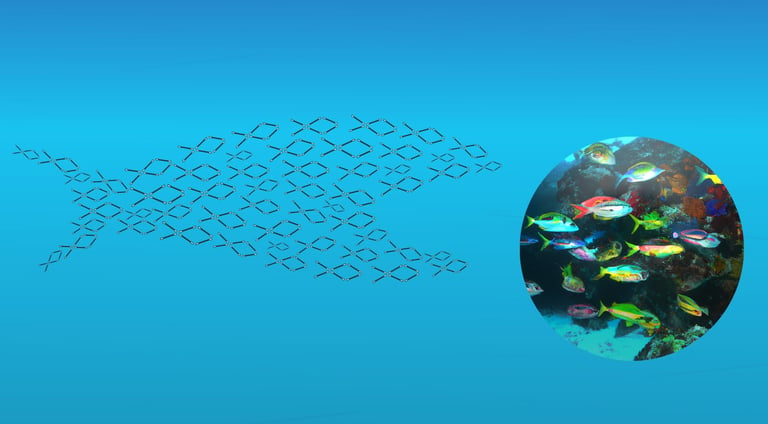
Recycling stations are readily available, and processing plastic bottles, glass, and paper packaging is straightforward. Yet, perhaps because of their small size, no one has seriously considered recycling cotton swabs. In reality, they are a significant source of plastic pollution, as millions of people use them every day worldwide. It is not their small size but their massive collective volume that we must take into account
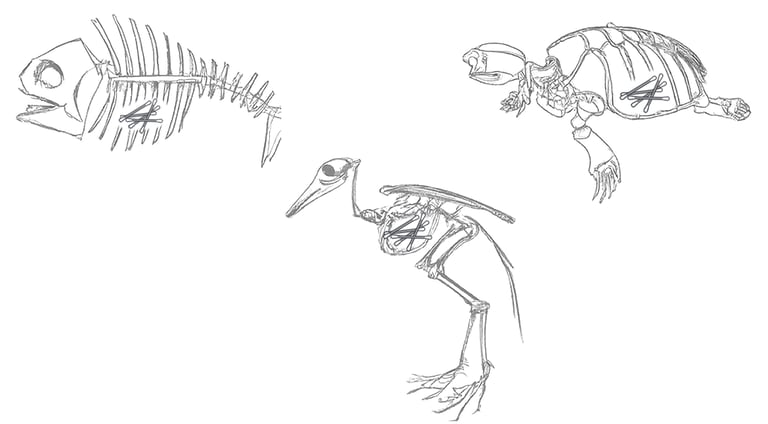
Although many governments have begun banning non-degradable swabs (biodegradability is crucial, though it has drawbacks—see the discussion below), most swabs on the global market are still not biodegradable. They persist in the environment for years, causing cotton-swab pollution to increase every day. Because used swabs are often flushed down toilets, millions end up in waterways and oceans, harming marine life. In Scotland, an average of 29 cotton swabs are found per 100 meters of beach, and these swabs have been detected in the stomachs of seabirds, fish, and turtles 😔
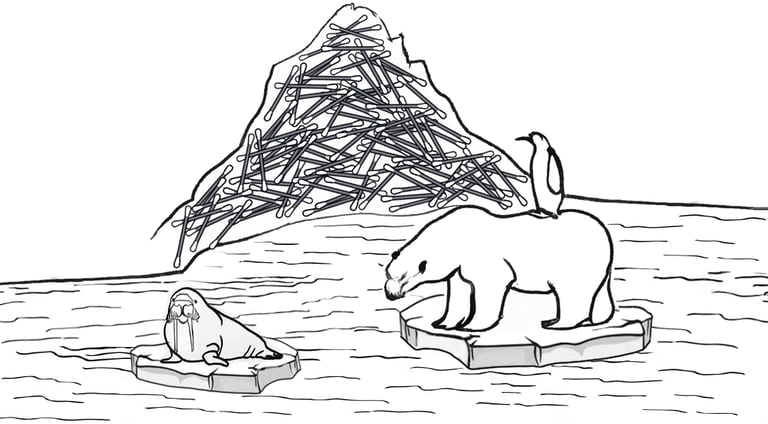
The current, 100-year-old, plastic-heavy cotton bud design has even more problems. Cotton is valuable, but it is also extremely demanding to cultivate. Environmentally, cotton production requires large amounts of chemical fertilizers, pesticides, and water, it is often referred to as ‘the dirtiest crop.’ Replacing cotton with a more sustainable material would be far more environmentally responsible
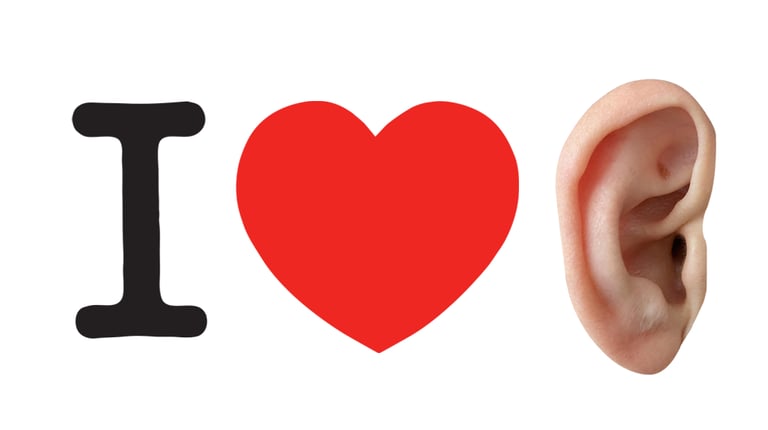
Another issue with current cotton swabs concerns ear health. The rigid plastic stick, when inserted into the ear along with the cotton tip, can cause injury to the inner ear or even damage the eardrum.
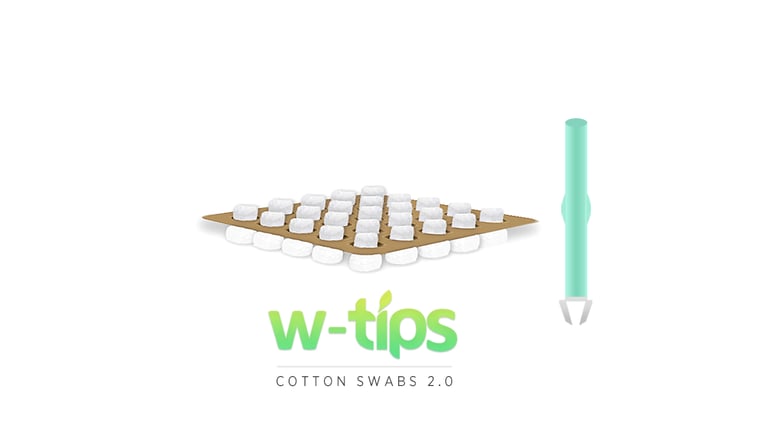
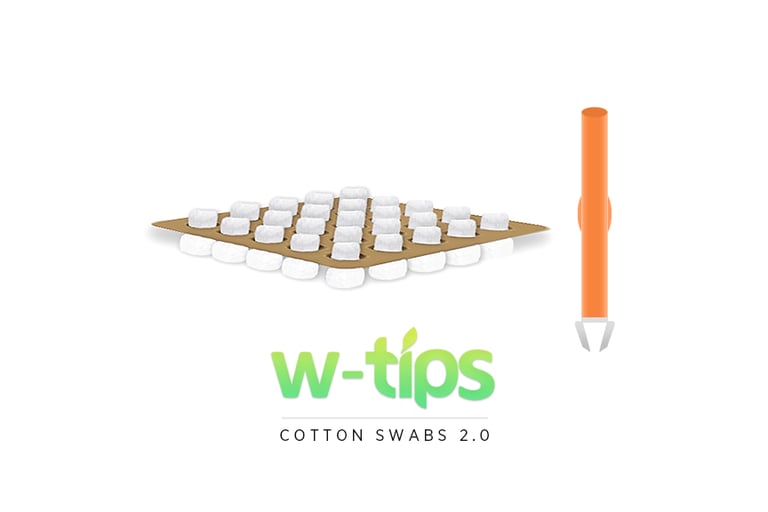
The solution to these issues is w-tips: Pick up a fresh tip with the specialized stick, use it, then discard only the used tip and keep the stick. Don't waste plastic or cotton, be kind to yourself and the planet.
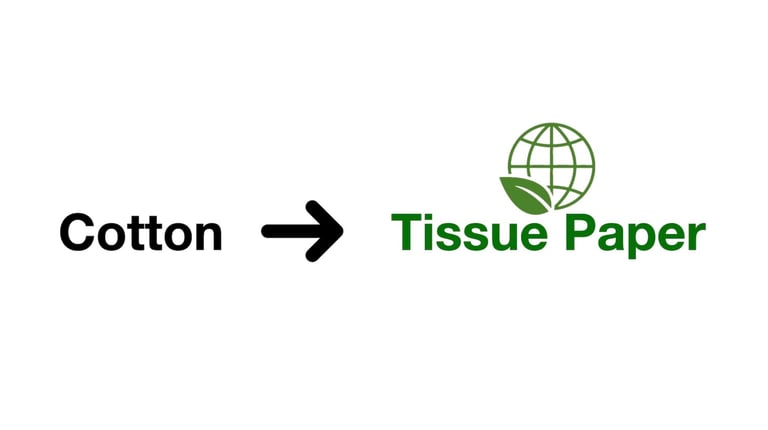
The material used in napkins and paper towels, plain tissue paper, is a more sustainable alternative to cotton. Plain tissue paper is cellulose: organic and naturally decomposing, just like cotton. Consumers can easily welcome and adopt tissue-paper tips, which are also soft and absorbent like cotton.
The tips have stems that allow them to be picked up and fixed by the specialized sticks. Thus, all w-tips designs are harmless to the ear, because only soft material enters the ear.
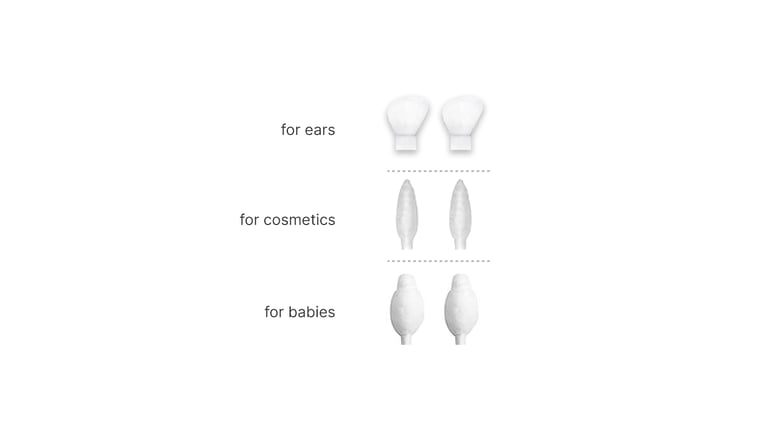
The product line will also include baby-safe tips and cosmetic-specific tips.
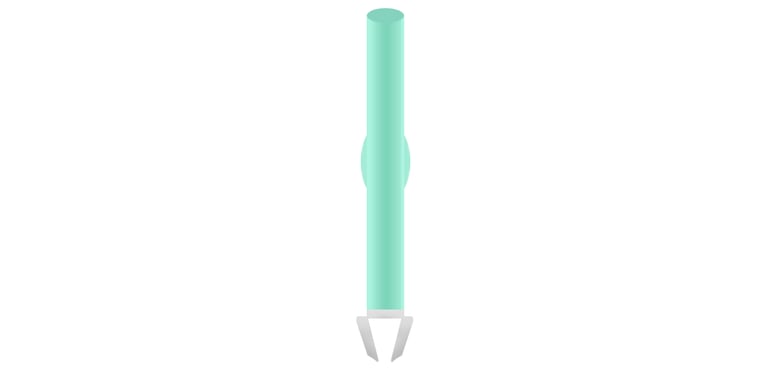
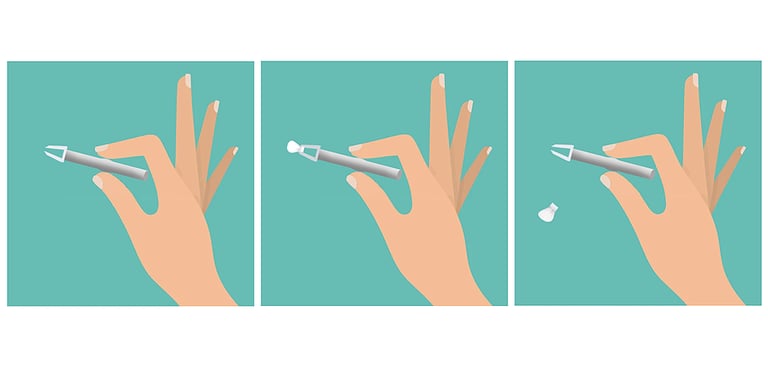
The specialized sticks will be around the size of a pinky finger. They let the users pick up and lock the tips in place. The sticks fix and discard with a gentle squeeze.
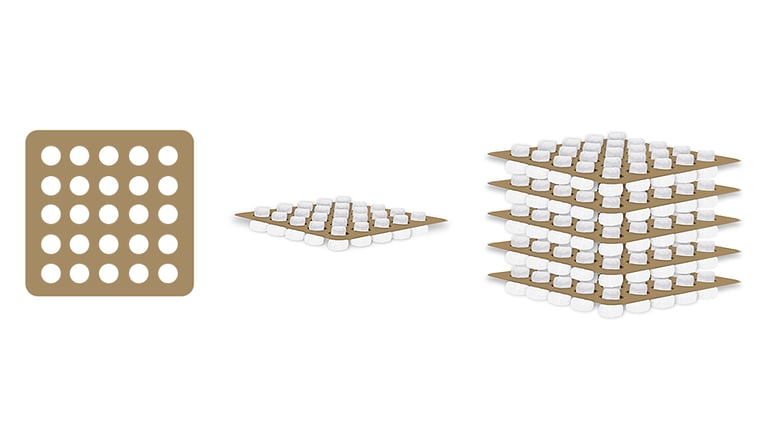
The tips are packaged and offered in the desired quantities. All materials used in w-tips will be eco-friendly (recyclable or biodegradable).
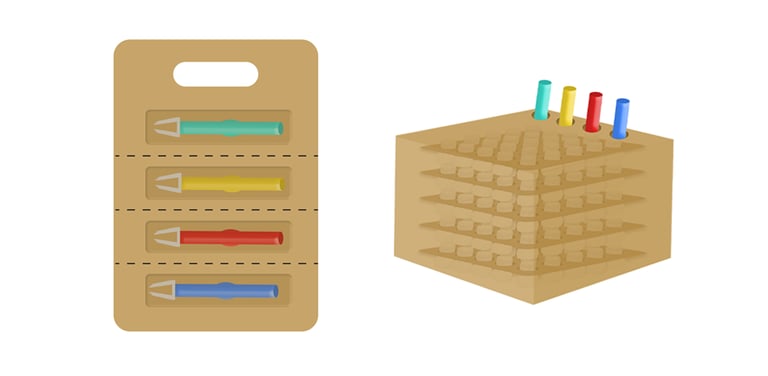
An example of the final product is shown. The sticks will come in unique colors for personal use, and there will be compartments to keep the sticks organized.
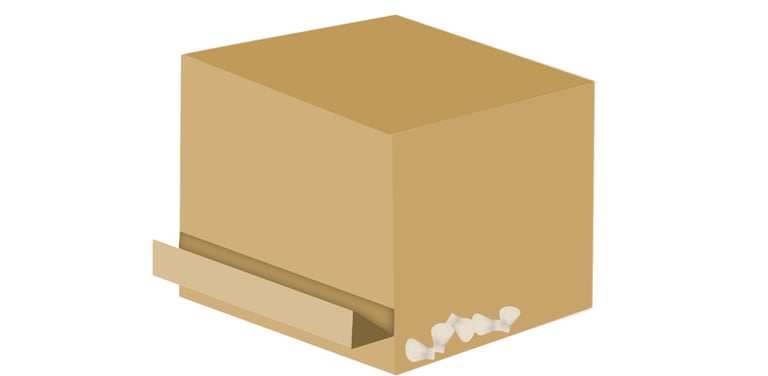
The boxes may include compartments where consumers can collect used tips. The compartments were developed specifically with "The Collection Campaign" in mind:
The Collection Campaign: A dream of fully circular, zero-waste w-tips
The campaign was designed with the future in mind: At the moment, tissue paper is not recyclable. But if it eventually becomes recyclable (while still meeting hygiene standards, being suitable for industrial use, and becoming widely available) w-tips could operate as a self-sustaining project 🙏
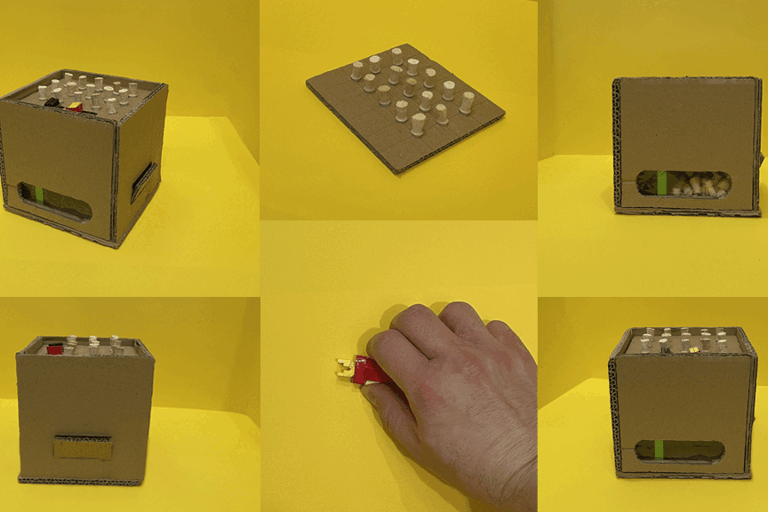
The compartments described above will enable the collection campaign. These compartments will feature a tip-counter (see the prototype video for details), designed to encourage users to collect their used tips. Users who exceed the threshold shown by the tip-counter can purchase their next box at a discounted price or earn sustainability points.
We believe that the success of this campaign would extend beyond A-tips. If we can successfully implement this campaign, we hope it will set an example for consumers and FMCG companies and inspire zero-waste campaigns for other products as well.
Discussion
The discussion section and the other sections below address many frequently asked questions. We therefore kindly ask that you read all of this information in its entirety 🙏
In fact, earwax isn’t dirt; on the contrary, it’s beneficial. Biologically, it is produced to protect and cleanse the ear canal, yet excessive accumulation can become an issue that often requires professional removal.
w-tips delivers meaningful eco-friendly impact by reducing plastic waste and replacing cotton with tissue paper across all tip types—including cosmetic tips—regardless of the campaign or compartments.
As noted above, if recyclable tissue paper were available today, we would incorporate compartments into all boxes, and w-tips would operate entirely through recycling and be completely waste-free. Since recyclable tissue paper does not yet exist, used tips can be disposed of in regular waste bins. Tissue paper is a natural material and decomposes in the environment.
What you see in the video and visuals is the current prototype; the final commercial product will be further refined and improved.
Why is w-tips the most eco-friendly cotton swab?
Although disposable swabs are biodegradable, their production and single-use nature still represent a waste of resources.
Moreover, biodegradable swabs do not disappear instantly; they take time to break down, during which they may float in oceans and physically harm marine animals.
And when millions of people use biodegradable swabs every day, a constant accumulation of waste can still build up in natural environments, such as ocean gyres, even if the items degrade relatively quickly. w-tips provide a far more eco-friendly solution by using reusable sticks and eliminating plastic and other material waste entirely.
Consumers have been using soft and absorbent cotton for ear care and cosmetics for 100 years, but cotton production carries significant environmental impacts, as noted above. In w-tips, cotton will be replaced with another soft and absorbent material: tissue paper. Plain tissue paper can be produced using recycled materials, making its production comparatively more environmentally friendly. By contrast, conventional cotton production imposes a far greater environmental burden, particularly in terms of water usage and chemical inputs; cotton cultivation is one of the most water-intensive crops and ranks among the highest in agrochemical consumption.
Reusable swabs are the most environmentally friendly option available, provided they meet proper hygiene standards. However, many existing reusable products either sacrifice decades of established consumer experience in order to be eco-friendly, or they require consumers to give up certain comforts in the name of sustainability (which is greatly appreciated!). Yet not every consumer finds it easy to change habits. Achieving both eco-friendliness and user-friendliness—softness and absorbency—makes adoption far easier and more widespread. More importantly, once consumers have a positive initial experience, they may no longer feel the need to return to the old product, enabling a durable and large-scale shift toward an eco-friendly alternative.
For references related to the topics discussed in this section and in the Discussion, please visit our Cotton Bud Pollution page